 ;
;
 ;
;
 ;
;
 ;
;
 ;
;
 ;
;


TNMP
January 28, 2026
The site navigation utilizes arrow, enter, escape, and space bar key commands. Left and right arrows move across top level links and expand / close menus in sub levels. Up and Down arrows will open main level menus and toggle through sub tier links. Enter and space open menus and escape closes them as well. Tab will move on to the next part of the site rather than go through menu items.

An Ongoing, Powerful Response
January 28, 2026
10:30 a.m. ET
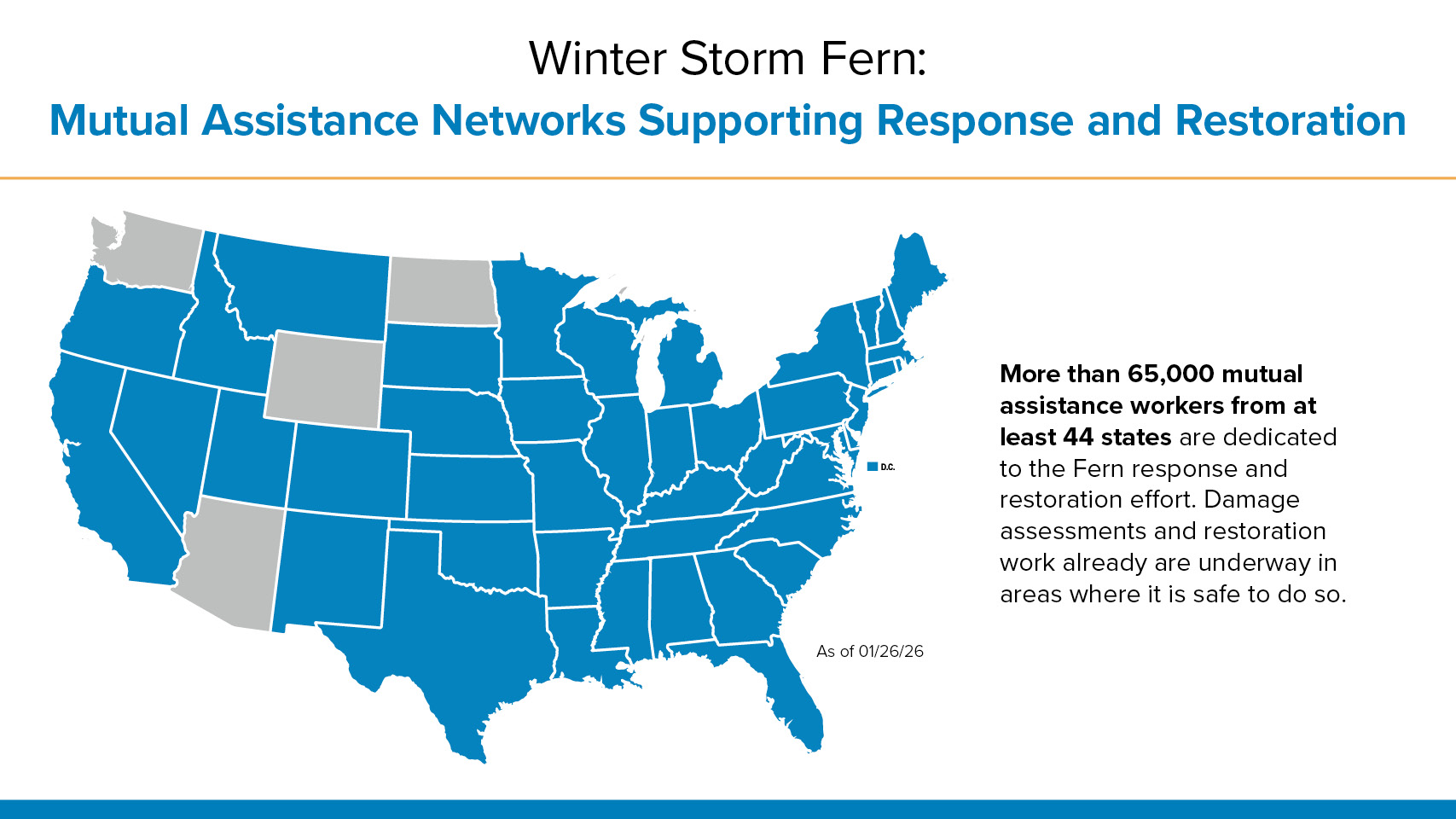
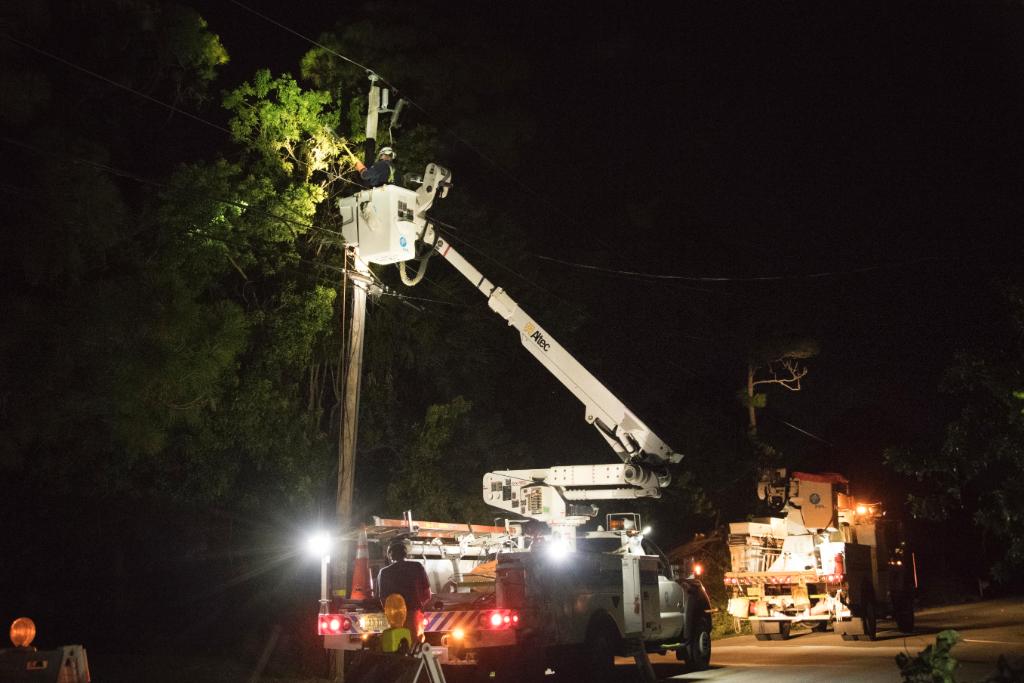
More than 65,000 workers from at least 43 states and Canada are working day and night to restore power to the communities impacted by Winter Storm Fern.
Though significant progress has been made—with power restored to more than 670,000 customers—crews are continuing to work diligently to restore power to all customers who can safely receive it.
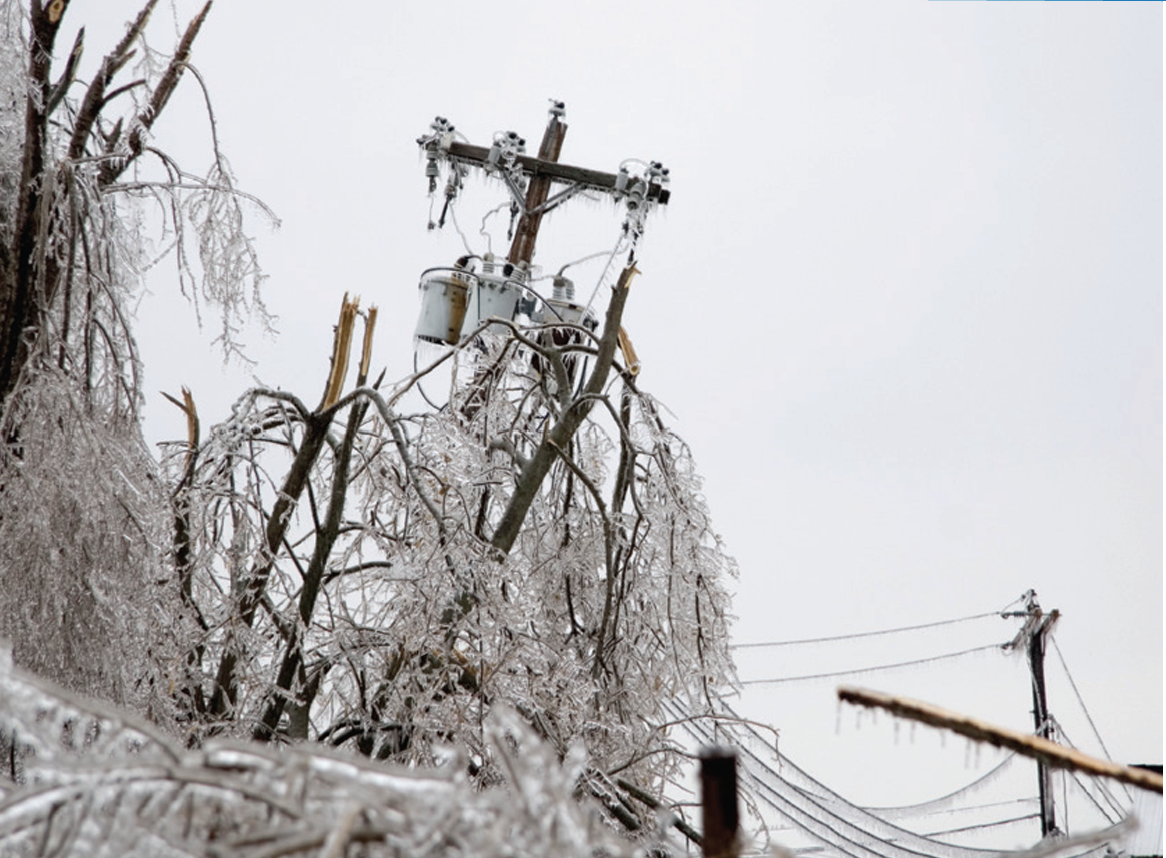
Thaw-and-freeze temperature cycles in the hardest hit communities continue to cause fallen trees and branches and impede roadways. As restoration progress continues, mutual assistance crews will continuously be reallocated to these most impacted communities until every customer who is able to receive power is safely restored.
The CEO-led Electricity Subsector Coordinating Council will convene again this evening to ensure unity of effort at the highest levels of government and across all segments of the industry, including investor-owned electric companies, electric cooperatives, and public power utilities.
Safety Comes First
The energy grid is highly interconnected, and even if customers do not see crews in their neighborhoods or on their streets yet, essential repairs are underway.
Some customers may not be able to receive power to their homes because of damage. If fallen trees or heavy ice damaged the point where wires connect to a customer’s home or business, inspections by a licensed electrician may be required before power can be restored.
Every electric company has a detailed plan for restoring power after storms. Typically, one of the first steps is to make sure that power is no longer flowing through downed lines. Restoration then proceeds based on established priorities. Below are the steps to restore power after a storm. Learn More.





January 28, 2026
January 28, 2026
January 28, 2026
January 28, 2026
January 28, 2026
January 28, 2026
January 27, 2026
January 27, 2026
January 27, 2026
January 26, 2026
January 26, 2026
January 26, 2026
January 26, 2026
January 26, 2026
January 26, 2026
January 26, 2026
January 26, 2026
January 25, 2026
January 25, 2026
January 25, 2026
January 25, 2026
January 25, 2026
January 25, 2026
January 25, 2026
January 25, 2026
January 25, 2026
January 25, 2026
January 25, 2026
January 25, 2026
January 25, 2026
January 25, 2026
January 25, 2026
January 25, 2026
January 24, 2026
January 24, 2026
January 24, 2026
January 24, 2026
January 24, 2026
January 24, 2026
January 24, 2026
January 24, 2026
January 24, 2026
January 24, 2026
January 23, 2026
January 23, 2026
January 23, 2026
January 23, 2026
January 23, 2026
January 23, 2026
January 23, 2026
January 23, 2026
January 23, 2026
January 23, 2026
January 22, 2026
January 22, 2026
January 22, 2026