Resources & Media
Background Image: Generic Banner


FOR IMMEDIATE RELEASE
FOR MORE INFORMATION CONTACT:
FOR MORE INFORMATION CONTACT:
Drew Maloney Talks Permitting Reform, Lower Energy Bills, & American Energy Innovation with the Washington Examiner
Drew Maloney Talks Permitting Reform, Lower Energy Bills, & American Energy Innovation with the Washington Examiner
WASHINGTON (February 06, 2026) — Today, the Washington Examiner published a video interview featuring EEI President and CEO Drew Maloney discussing how advancing permitting reform can help to increase reliability and lower costs for customers while strengthening energy dominance. Maloney also highlighted a new report conducted by Charles River Associates (CRA) that found retail electricity rates have remained largely stable over the past five years.
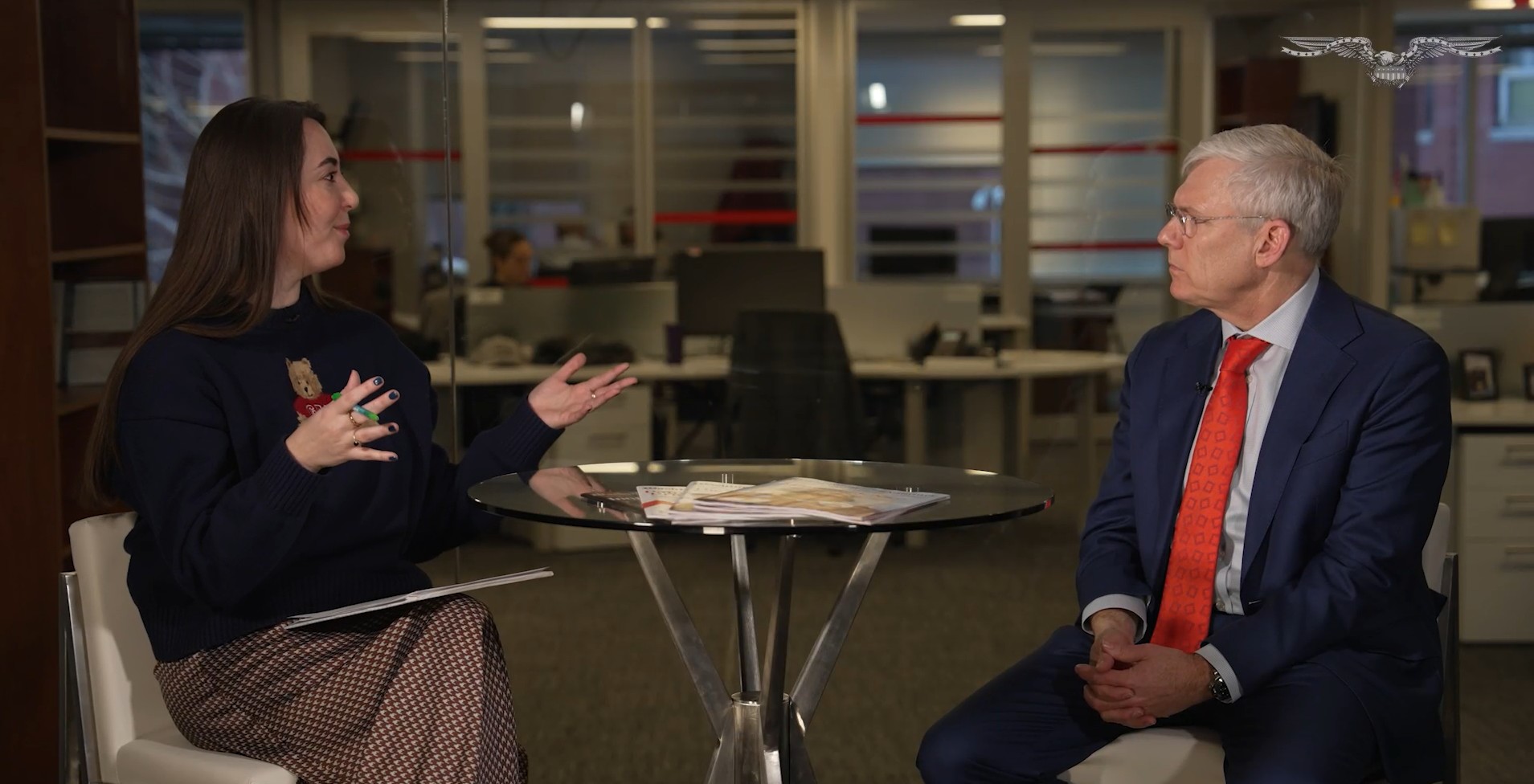
During his interview with the Washington Examiner’s Callie Patteson, Maloney discussed:
- Focus on lowering costs for customers: "Electric companies every day are working with their customers to identify more efficiencies in the system, whether it's grid-enhancing technologies that lower costs or software development that can ensure power is well balanced in the system."
- Partnerships with data centers: "What these large load agreements are trying to do is protect customers. They're requiring the data centers to fund their interconnection, fund upgrades to the grid, and ultimately benefit the customer. If you look at a lot of the recent announcements that we've seen, the benefits to customers, the benefits to the local tax base are in the billions of dollars. Over the long term, this is a win-win for the communities, for the electric companies, for the customers, because we're going to get a more resilient grid."
- Strengthening U.S. competitiveness: "One of the challenges we face in this country is it takes us too long to build generation and too long to build transmission. If you look at China, which is our big competitor—especially on AI and data center infrastructure—China can build a power plant in one to two years, and it takes us more than a decade. You could go right at the affordability issue if you streamline the permitting process."
- Permitting reform prospects: “I think now is the time. There is a recognition that, in order for us to maintain our global competitiveness, we have to be able to build generation and transmission faster than we do today. It's the only way to address the real affordability problem, because the cost imposed by permitting delays and litigation puts too much on the customer.”
- Electricity rate stability: "The CRA study highlighted the fact that, in 34 states throughout the country, electricity rates have tracked lower than inflation. What most people don't understand about electricity rates is they are really set at the state level. You have to look at the state averages that have disproportionately skewed the national average."
- The importance of an all-of-the-above energy approach: "We need all of the above. You look at a state like Iowa—a large percentage of their power comes from wind. Texas has a good mix of wind and solar. You see during a storm like Fern, where we became very reliant on fossil fuel as sort of base load—you need that, too. We need more nuclear. We need it all. We support it all, and, as we say, we need as many electrons on the grid as possible right now."
About EEI
About EEI
EEI is the association that represents all U.S. investor-owned electric companies. Our members provide safe, reliable electricity for nearly 250 million Americans, and operate in all 50 states and the District of Columbia. Collectively, the electric power industry supports more than 7 million jobs in communities across the United States and drives economic growth and prosperity. EEI also includes hundreds of industry suppliers and related organizations as Associate Members.